
All things trends, social media, luxury and marketing
From curated case studies to insights on strategy, creativity, and community
EDITORIAL
THE

The in-house vs agency social media decision is often framed as a choice between control and external expertise. For an established brand, bringing an outside partner into social media can raise an immediate concern: how much control are we giving away? Marketing teams have spent years developing the brand and understanding its audience. They have also built the internal knowledge that informs everything from a product launch to the language used in a caption. Social media is one of the places where that identity is most visible. Involving an external team can therefore feel like creating distance from the people who know the brand best.
In practice, a good agency relationship should not require that trade-off. The internal team continues to own the brand, its priorities and the final decisions around what goes live. What changes is the amount of specialist creative thinking and social media expertise available to translate those priorities into content. For Marketing Directors considering in-house vs. agency social media, the more useful question is not who gets control. It is what each side contributes and what becomes possible when those strengths work together.
What stays with your internal team
There are parts of a brand that should remain firmly anchored inside the company. Strategic priorities and commercial context are difficult to replicate from outside. The same is true of the internal understanding of what is happening across the wider business. The internal marketing team also retains the guardrails around tone of voice and brand identity. An external partner may suggest new ways of expressing them, but those ideas still need to make sense within the established identity. They also need to support the wider campaigns, launches, partnerships and business priorities around it.
Most importantly, final sign-off stays with the client. Working with an outside partner should not mean discovering what your brand has posted at the same time as your audience does. A clear approval structure gives the internal team visibility over what is being planned and why. It also shows how each direction relates to the wider marketing strategy. This is where concerns around brand control when outsourcing marketing often come from: responsibility for managing a channel can easily be confused with ownership of the brand itself. In a well-structured partnership, those are two very different things.



What an agency adds to an in-house social media team
Looking at in-house vs agency social media purely as a question of ownership misses the more useful distinction: where different kinds of knowledge and capacity sit. If the internal team retains that knowledge and control, the value of an outside partner has to come from somewhere else. One of the most immediate differences is creative capacity. Producing genuinely fresh ideas every month is difficult when social media sits alongside launches, events, partnerships, reporting and the rest of a marketing team’s responsibilities. That pressure is not unique to smaller teams. Sprout Social reports that 80% of social media individual contributors spend more than half of their time on operational work rather than insight-driven work. Even a strong content calendar can gradually become familiar when the same formats and themes are revisited. This is not a lack of creativity, but often a lack of time or distance to explore alternatives.
An external creative team approaches those same priorities from a different position. It can question what has become habitual, bring references from outside the immediate brand environment and develop concepts specifically for the platforms where they will appear. Working across different brands, sectors and audiences also creates exposure to a much wider range of content and creative approaches. There is a practical effect to this too. When an outside partner leads creative development, a content calendar can move from broad business priorities to concrete ideas much faster. The internal team no longer needs to originate every concept before work can begin.
What a month can look like before and after
Without dedicated social media support, monthly planning often begins with information scattered across different parts of the marketing calendar. There may be a campaign launching, an event to communicate and a seasonal priority. At the same time, new imagery and existing content still need to find their place in the calendar. Someone then has to turn all of those inputs into a coherent month of social content while continuing to manage everything else. Under time pressure, the most obvious ideas naturally tend to win. Formats that worked previously return and content becomes more reactive. The calendar can start reflecting what was easiest to produce rather than what would have been most useful or interesting for the audience.
Bringing an outside creative partner into that process changes where the work begins. The internal team provides the context, priorities and upcoming moments, while the partner develops those inputs into creative directions, content concepts and a structured calendar. Both teams can then review, challenge and refine those ideas before production starts. The internal team has not disappeared from the process; its role has simply shifted towards the decisions for which its knowledge is most valuable. Instead of having to generate every idea from scratch, it can assess whether the proposed direction supports the brand, the business and the wider marketing plan.
01
Without dedicated support
Business priorities
↓
Limited planning time
↓
Familiar ideas & formats
↓
Reactive content calendar
LIMITED CREATIVE CAPACITY
02
With a creative partner
Business priorities
↓
Creative development
↓
Review & refinement
↓
Structured content calendar
A CLEAR CREATIVE FLOW
How creative control works in practice
This kind of collaboration only works if it is built into the process. Saying that a client “keeps control” means very little unless there is a structure that makes that possible. At By A Management, our monthly social media process includes a strategy call and content calendar sign-off. The strategy conversation gives both teams a shared view of the month ahead, including what is happening within the business, what needs to be communicated, where there may be creative opportunities and how those priorities should translate into social content.
From there, our team develops the direction and ideas into a content plan that the client sees and approves before the content goes live. This gives the internal marketing team a clear point of sign-off while allowing our team to lead the creative and strategic development behind it. That distinction is important because approval and ideation are not the same responsibility. A Marketing Director should be able to assess whether a proposed direction is right for the brand without having had to invent that direction themselves. Over time, the process also creates continuity: rather than beginning each month with an empty calendar, both teams are working from an ongoing understanding of the brand, its priorities, its performance and what is coming next.
In-house knowledge and outside perspective work differently
There are good reasons to keep social media entirely in-house, particularly when a company has a sufficiently specialised team and the resources to give the channel sustained attention. There are equally good reasons to bring in an outside partner, and the right structure will depend on the organisation. What becomes less useful is treating those two options as opposites. An internal marketing team brings proximity to the business that an agency cannot replace, while an outside team brings a different kind of proximity to social platforms, content formats, creative developments and the work being produced across the wider market. Those forms of knowledge are different, but they can be highly complementary.
For multi-location or multi-market brands, that combination can become particularly valuable. A central marketing team may need to protect the consistency of the brand while simultaneously producing enough content to remain relevant across different audiences, locations or languages. An external partner can help develop the creative system and content direction around that central identity, while the internal team continues to provide the context and oversight needed to keep it coherent. The objective is not to make every market look identical, nor to allow each one to become its own brand, but to create enough structure for consistency and enough flexibility for relevance.


What working with By A looks like
At By A Management, our Social Media Management work is designed to sit alongside internal marketing teams rather than replace them. Strategy, creative direction and content planning establish what the brand should be doing on social media and how that connects to wider marketing priorities. From there, our work can extend into Content Creation, account management and community engagement, allowing the direction agreed at strategy level to be carried through consistently.

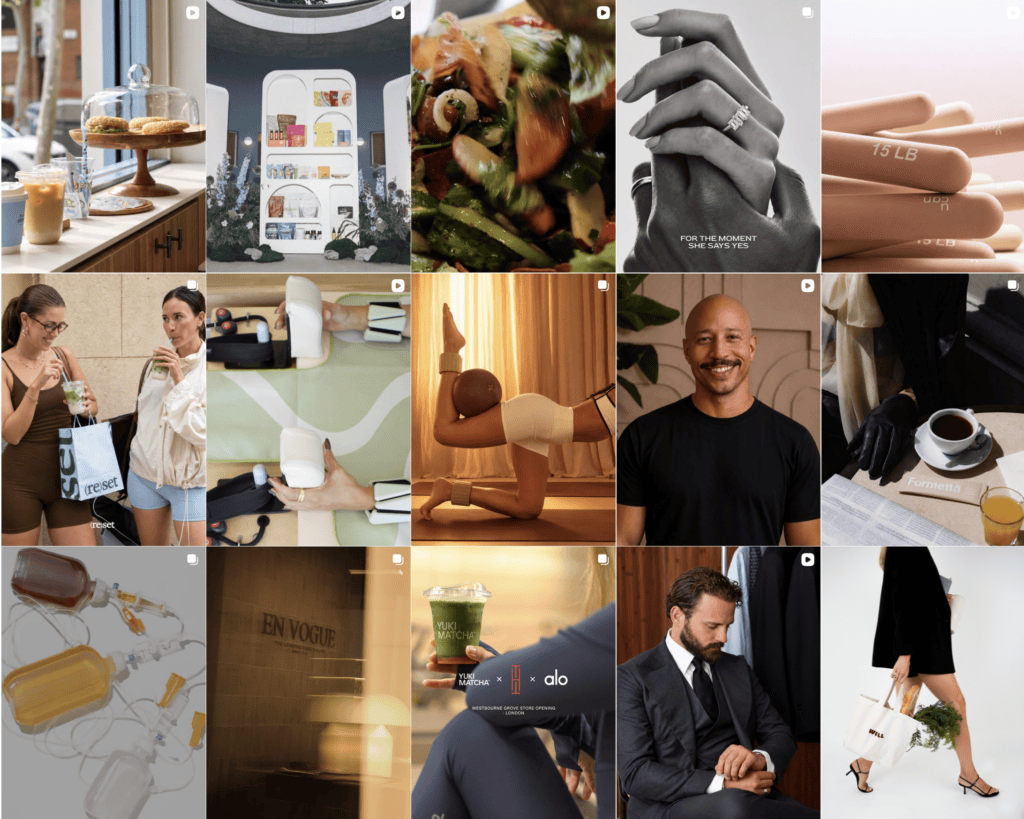
Because those capabilities sit within the same agency, a concept can move from the initial strategy conversation into a content calendar, through a shooting day and editing, and eventually onto the platforms while remaining connected to the original objective. Our wider services across PR & Event Management, Brand Ambassadors, Branding & Website Development and Email Marketing allow that thinking to extend beyond social media when the wider campaign requires it. The internal marketing team continues to bring the part nobody outside the company can replicate: ownership of the brand and a close understanding of where the business is going. By A brings the specialist perspective, creative development and delivery around it.
Curious what a month of working together would actually look like?
Leave a Reply

– anabel, ceo & founder
Do what you love and love what you do.
Behind our articles stands a team of strategists, marketing experts, and creatives who don’t just talk about digital success – we build it every day. At By A Management, we believe in transparency, expertise, and showing our work. This editorial is your backstage pass to our thinking, our process, and our people.
By A Management is a growing boutique creative agency based in Zurich and Madrid. We specialize in social media, content creation, and strategy-led brand growth for luxury, wellness, lifestyle and fitness brands.


