
All things trends, social media, luxury and marketing
From curated case studies to insights on strategy, creativity, and community
EDITORIAL
THE
Luxury has always loved a certain kind of distance. A velvet rope. A polished storefront. A campaign image so immaculate it almost asks not to be touched. For years, that distance was part of the seduction. You did not merely buy the object. You admired it, desired it, and waited for it to admit you.
Then the culture changed.
The internet flattened taste, sped up trends, and taught younger audiences to treat fashion less like a museum and more like a conversation. Suddenly, perfection alone was not enough. A beautiful bag could still fail if it felt too remote, too rehearsed, too pleased with itself. Relevance started to matter as much as aspiration. Personality started to matter as much as polish. And in that shift, Coach found its moment.
That is what makes the brand so interesting in 2026. Coach is not simply selling handbags. It is selling ease, familiarity, and a version of luxury that feels awake to the way people actually live now. The brilliance is that it has managed this without flattening itself into mass-market noise. It still looks premium. It still behaves like a fashion house with history. But it no longer speaks from a pedestal. It speaks in a tone people want to answer back to.
There is real business muscle behind that impression. Recent Reuters reporting that in fiscal Q2 2026, revenue at Coach surged 25 percent to $2.14 billion, helped in large part by demand for the Tabby line. Parent company Tapestry also increased marketing spend by about 40 percent in the quarter, while its chief executive told Reuters she sees the opportunity for Coach to become a $10 billion brand. That is not the language of a label quietly coasting on nostalgia. That is the language of a brand that knows it has heat and intends to use it.
And yet, numbers alone do not explain why Coach feels newly magnetic. Plenty of brands spend more and say less. What Coach understands, perhaps better than many of its peers, is that desire now moves through culture before it moves through checkout. The product still matters, of course. It matters enormously. But product by itself does not create obsession. Obsession comes from context. From casting. From mood. From the sense that a brand belongs not only in the wardrobe, but also in the conversation.
That is where Coach has been unusually nimble. The brand has been open about the fact that awareness was never its problem. Relevance was. According to its North America marketing leadership, Coach deliberately leaned into longer creator partnerships rather than one-off influencer transactions, and the brand has said this approach lifted consideration among Gen Z female shoppers. In other words, it stopped treating creators like rented media space and started treating them like real interpreters of brand meaning. That is a far smarter move. Luxury does not become cooler because it shouts louder. It becomes cooler when the right people fold it naturally into the texture of their lives.
The Tabby bag sits at the center of all this with almost suspicious perfection. It is recognisable without being tired. It has shape, attitude, and enough visual clarity to survive the ruthless compression of social feeds. Most importantly, it gives Coach a hero product at a moment when many brands feel stylistically scattered. A hero product gives marketing a spine. It gives audiences something to remember. It lets the brand repeat itself without becoming repetitive. The Tabby does exactly that. It is the sort of item that can anchor a campaign, travel across platforms, and still feel intact by the time it lands in-store.
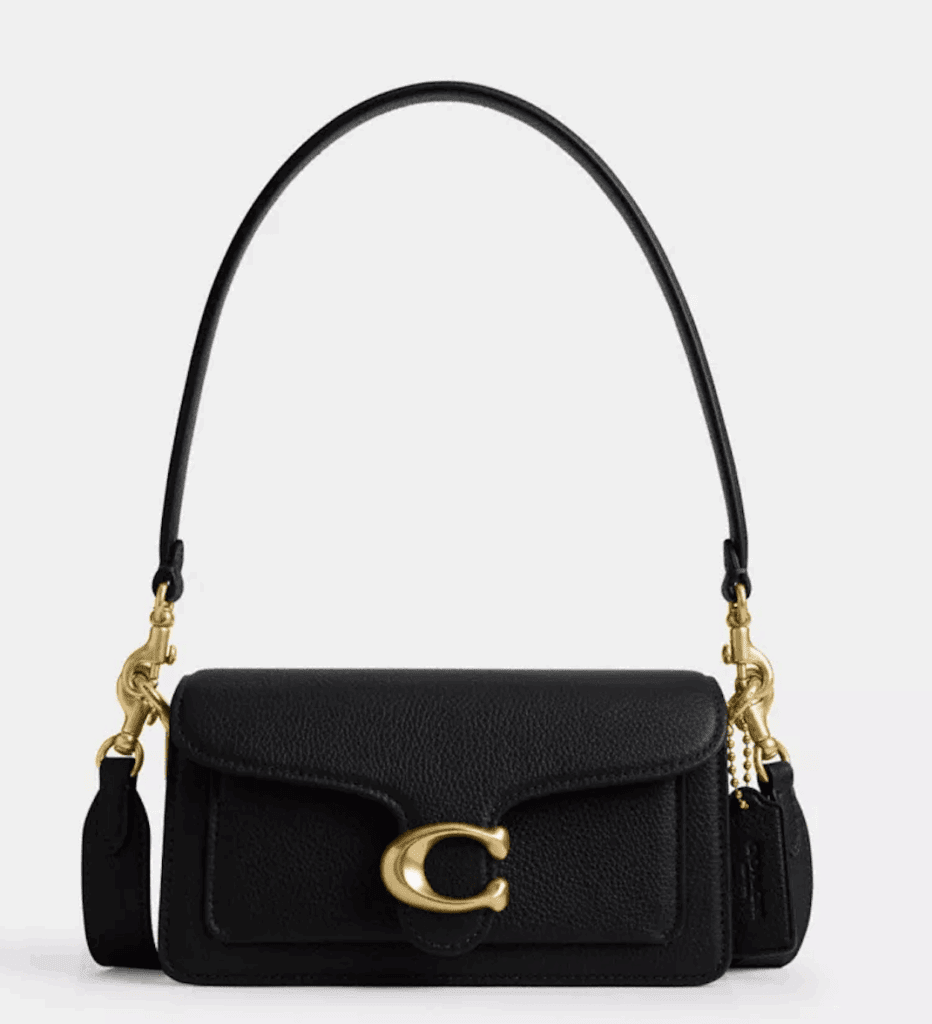
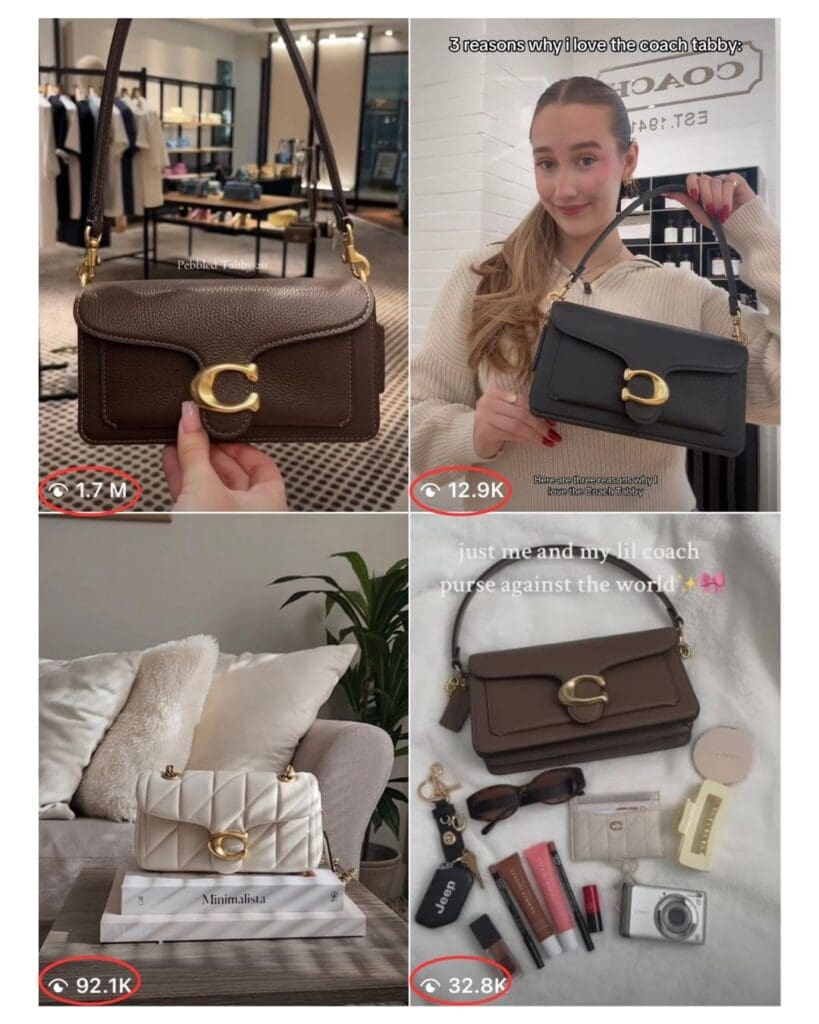
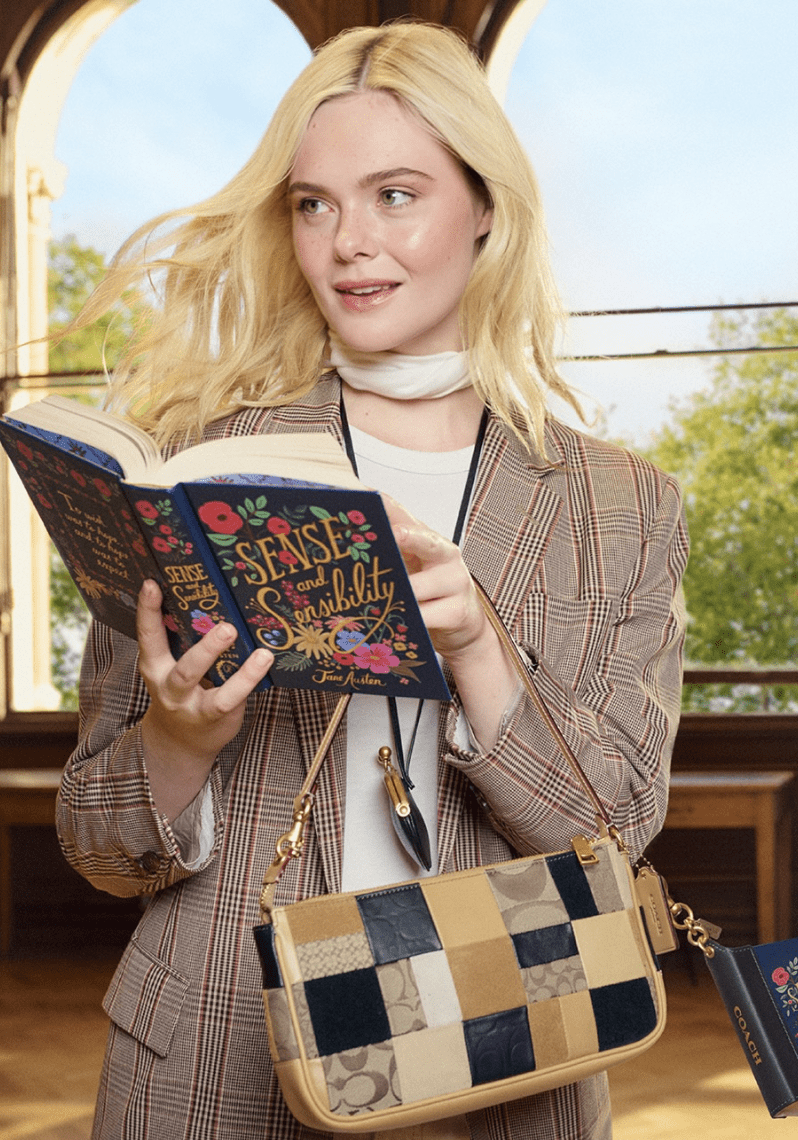
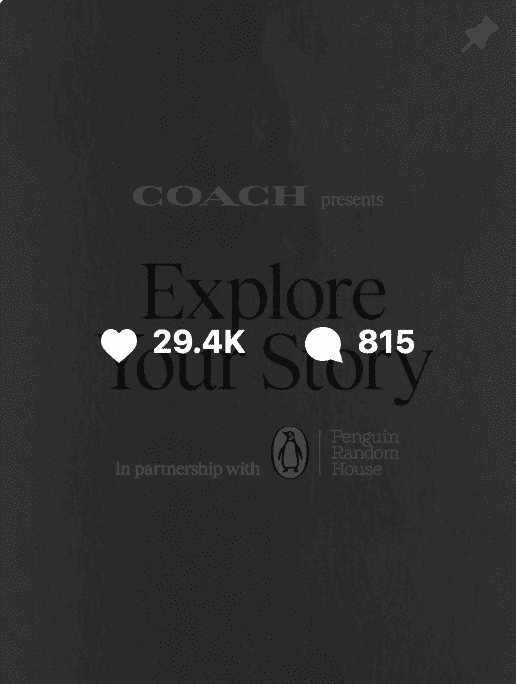
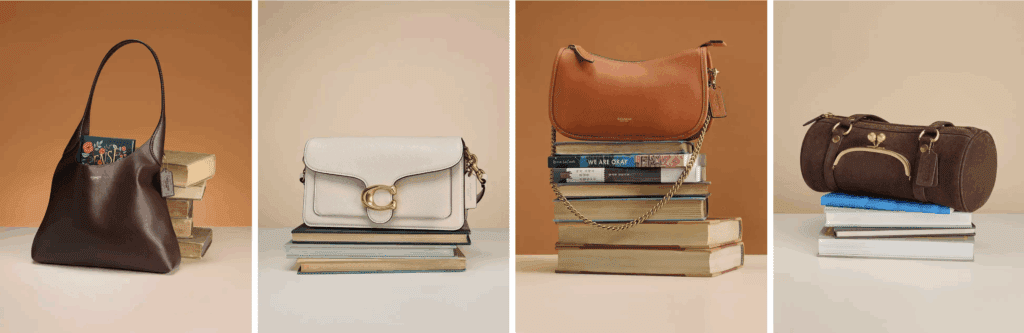
The latest expression of this strategy is Coach’s Spring 2026 campaign, “Explore Your Story”, which supports the Tabby and a collection of miniature readable book charms. The campaign, according to reporting and the brand’s own site, was co-created with Gen Z communities across markets and features ambassadors including Elle Fanning, Storm Reid, Paige Bueckers, Lilas, Soyeon, and Shan Yichun. Its premise is almost charmingly unfashionable in the best possible way: story, reading, self-expression, and a little romance in an age of constant scrolling. It is a concept with tact. It could have become gimmicky in weaker hands. Instead, it feels like a small act of resistance against algorithmic sameness.
That may be the most compelling thing Coach is doing right now. It is not chasing youth culture by mimicking it badly. It is not performing irony from a boardroom. It is not trying to become a meme. It is building campaigns that still carry fashion fantasy, but with enough humanity to feel porous. The book charms are a perfect example. On paper, they sound borderline absurd. Tiny readable books dangling from a luxury handbag could have gone very wrong. But in execution, they are witty, collectible, and emotionally legible. They make the bag feel personal. They give the owner a small role in the styling story. They invite participation, which is one of the most valuable currencies in marketing today.
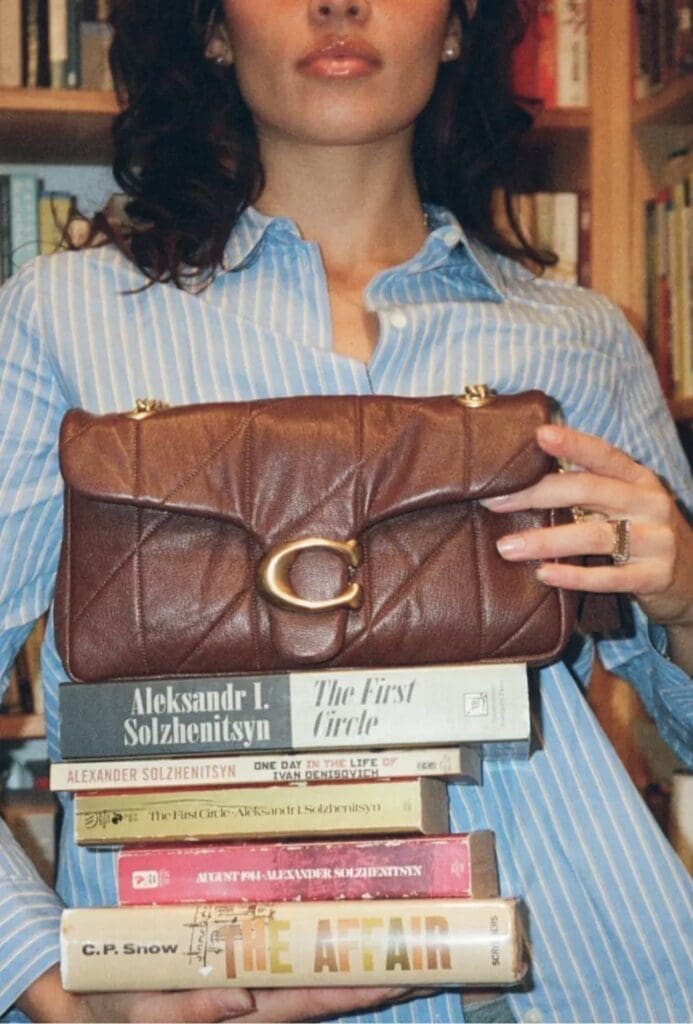
There is a lesson here for any brand still clinging to the old binary between exclusivity and accessibility. The smartest luxury marketing in 2026 does not choose between them. It choreographs both. It offers aspiration without stiffness. It preserves image while loosening control. It knows that audiences, especially younger ones, do not want to be talked at. They want to be let in, just enough to feel like insiders without puncturing the dream entirely.
From a Zurich vantage point, that balance is especially appealing. There is something very contemporary, and very commercially intelligent, about a brand that understands understatement and excitement at once. Coach is not trying to be the loudest name in the room. It is trying to be the one that people carry, post, discuss, and return to. That is a more durable form of relevance. It lives in habit, not hype alone. It has not assumed that history can do the work of imagination. Instead, it has treated heritage as a foundation and then layered in sharper product focus, stronger creator strategy, and a campaign world that feels current without becoming disposable.
That is why Coach deserves editorial attention right now. Not because it is having a good quarter, though it is. Not because the Tabby is selling, though it clearly is. But because the brand has achieved something more elusive. It has made luxury feel warm again. Still glossy, still desirable, still elevated, but warm. In an era of synthetic content, tired trend cycles, and endless visual noise, that warmth can feel almost extravagant.
Leave a Reply

– anabel, ceo & founder
Do what you love and love what you do.
Behind our articles stands a team of strategists, marketing experts, and creatives who don’t just talk about digital success – we build it every day. At By A Management, we believe in transparency, expertise, and showing our work. This editorial is your backstage pass to our thinking, our process, and our people.
By A Management is a growing boutique creative agency based in Zurich and Madrid. We specialize in social media, content creation, and strategy-led brand growth for luxury, wellness, lifestyle and fitness brands.


